Caring for a child’s natural hair can feel overwhelming, especially when you’re already managing the countless responsibilities of parenthood. From school drop-offs to bedtime routines, adding another complex task to your daily schedule might seem daunting. But here’s the truth: natural hair care doesn’t have to be complicated or stressful. Every week, we hear from parents and caregivers who share the same concern: “I just want to know what to do with my child’s hair.” If this sounds familiar, you’re not alone. Many parents, regardless of their own hair type or experience, find themselves navigating uncharted territory when it comes to their child’s natural hair care needs. The good news is that with the right knowledge, patience, and approach, you can create a hair care routine that works for both you and your child. This comprehensive guide will walk you through everything you need to know about caring for your child’s natural hair, from understanding different hair types to selecting the right products and establishing healthy routines.
Understanding Your Child’s Hair Type
Before diving into products and routines, it’s crucial to understand your child’s specific hair type. Natural hair is typically categorized using a system that ranges from Type 2 (wavy) to Type 4 (coily/kinky), with subcategories A, B, and C indicating increasing curl tightness.
Type 2: Wavy Hair
- 2A: Loose, barely-there waves with fine texture
- 2B: More defined waves with some frizz and medium texture
- 2C: Strong waves with some curls and coarse texture
Type 3: Curly Hair
- 3A: Large, loose curls that are easy to straighten
- 3B: Springy ringlets with more volume and density
- 3C: Tight corkscrews with lots of volume and density
Type 4: Coily/Kinky Hair
- 4A: Soft coils with visible curl pattern when stretched
- 4B: Z-pattern hair with less defined curl pattern
- 4C: Tightest curl pattern with minimal visible curls when not manipulated
Understanding your child’s hair type helps you choose appropriate products, techniques, and styling methods that will keep their hair healthy and manageable.
The Foundation: Building Positive Hair Experiences
Creating a Supportive Environment
Your child’s relationship with their hair begins with the messages they receive at home. The words you use, the tone you set, and the patience you demonstrate during hair care sessions all contribute to how they’ll view and care for their hair throughout their life.
Language Matters:
Use positive, affirming language when talking about their hair. Words like “beautiful,” “unique,” “special,” and “magical” help build confidence. Avoid negative terms or expressions of frustration, even when you’re having a challenging hair day.
Make it Enjoyable:
Turn hair care time into bonding time. Play their favorite music, tell stories, or let them help by holding products or choosing hair accessories. This transforms what could be seen as a chore into quality time together.
Celebrate Their Natural Texture:
Help your child appreciate their hair’s natural state. Show them pictures of people with similar hair types who are successful, beautiful, and confident. This builds pride in their natural texture from an early age.
Patience Over Perfection
Every child is different, and their hair care needs will be unique. Some children love having their hair washed and styled, while others find the process overwhelming or uncomfortable. Pay attention to your child’s responses and adjust your approach accordingly.
Common Sensitivities to Watch For:
- Discomfort with water temperature or pressure
- Sensitivity to having their scalp touched
- Difficulty sitting still for extended periods
- Overstimulation from multiple textures or sensations
- Anxiety about detangling or pulling sensations
Adaptation Strategies:
- Start with shorter sessions and gradually increase duration
- Use distraction techniques like tablets, books, or conversation
- Break styling sessions into multiple shorter sessions
- Allow your child to participate in age-appropriate ways
- Be flexible with your timeline and expectations
Essential Hair Care Basics
The Cleansing Process
Frequency: Brown skin children’s hair typically doesn’t need daily washing. Most children benefit from washing once or twice per week, depending on their activity level, hair type, and scalp condition.
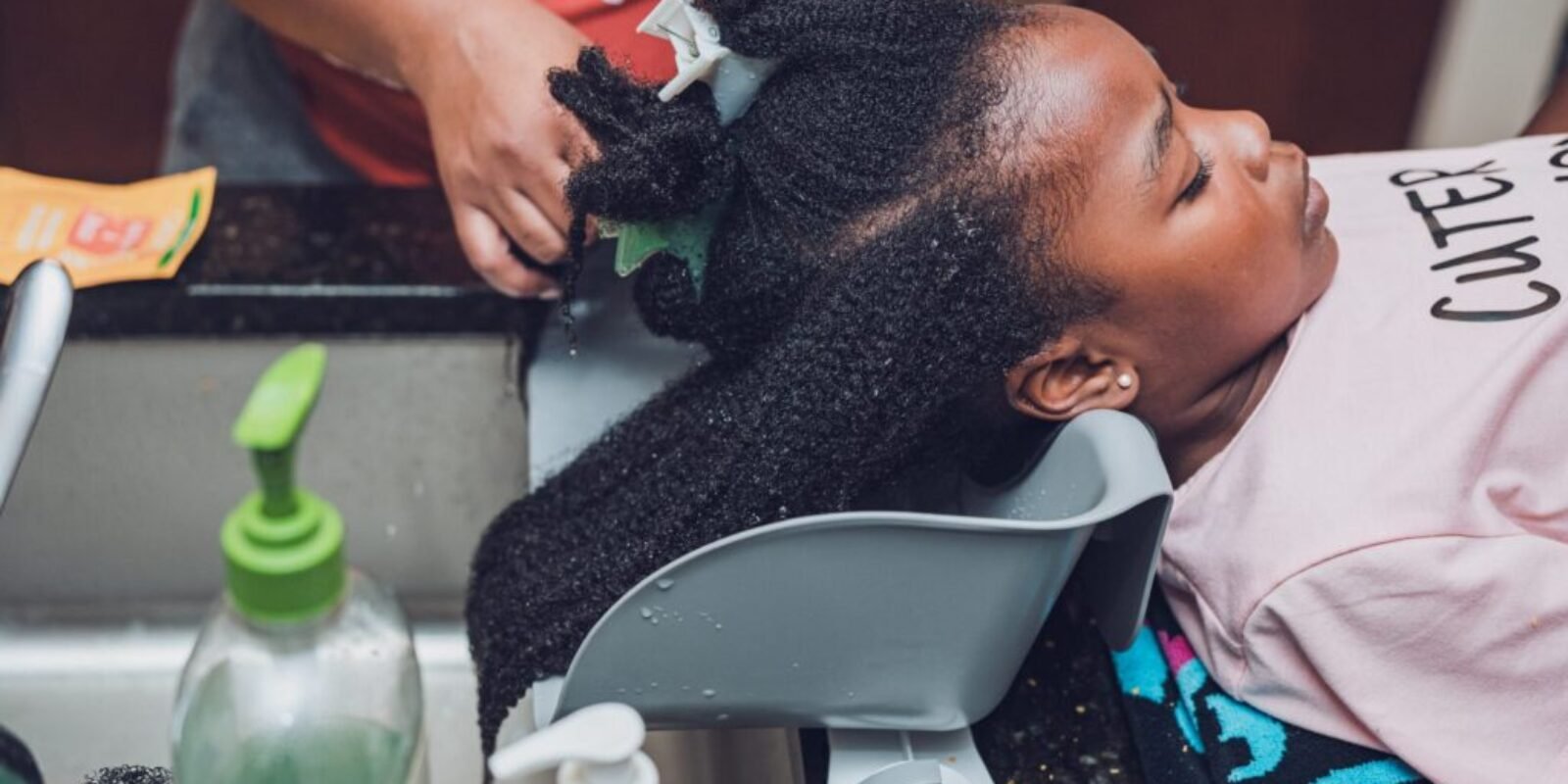
Pre-Wash Preparation: Before washing, gently detangle the hair using a wide-tooth comb or your fingers. Apply a small amount of oil or conditioner to help ease the detangling process.
Washing Technique:
- Wet the hair thoroughly with lukewarm water
- Apply shampoo primarily to the scalp, not the length of the hair
- Gently massage the scalp with your fingertips (not nails)
- Rinse thoroughly, ensuring no product residue remains
- Follow with conditioner from mid-length to ends
Deep Conditioning
Deep conditioning treatments should be incorporated weekly or bi-weekly, depending on your child’s hair needs. These treatments provide intense moisture and help repair damage from daily manipulation.
Application Tips:
- Apply deep conditioner to damp, freshly shampooed hair
- Focus on the mid-lengths and ends where hair is typically driest
- Cover with a plastic cap or warm towel to enhance penetration
- Leave on for 15-30 minutes depending on product instructions
- Rinse thoroughly with cool water to seal the hair cuticle
Moisturizing and Sealing
Natural hair thrives with regular moisture. The “LOC” or “LCO” method (Liquid, Oil, Cream) is an effective approach:
- Liquid: Apply water or a water-based leave-in conditioner
- Oil: Seal in moisture with natural oils
- Cream: Apply a moisturizing cream to further lock in hydration
Natural Product Recommendations by Hair Type
For Type 2 (Wavy Hair)
Cleansing:
- Castile soap (Dr. Bronner’s Baby Mild)
- Apple cider vinegar rinses
- Honey and water cleanser
- Diluted aloe vera gel
Conditioning:
- Coconut milk
- Aloe vera gel
- Light oils like jojoba or argan oil
- Flaxseed gel
Styling:
- Sea salt spray (homemade with sea salt and water)
- Light leave-in conditioners
- Diluted aloe vera gel for hold
For Type 3 (Curly Hair)
Cleansing:
- Black soap (African black soap)
- Clay washes (rhassoul or bentonite clay)
- Co-washing with natural conditioners
- Honey and water mixtures
Deep Conditioning:
- Avocado and honey masks
- Coconut oil treatments
- Shea butter masks
- Banana and honey treatments
Daily Moisturizing:
- Shea butter
- Coconut oil
- Jojoba oil
- Aloe vera gel
- Rose water spray
Styling:
- Flaxseed gel
- Okra gel (homemade)
- Chia seed gel
- Marshmallow root gel
For Type 4 (Coily/Kinky Hair)
Cleansing:
- African black soap
- Clay washes (bentonite clay with apple cider vinegar)
- Castile soap with oils
- Co-washing with thick, natural conditioners
Deep Conditioning:
- Pure shea butter treatments
- Coconut oil and honey masks
- Avocado and olive oil treatments
- Mayonnaise and egg treatments (for older children)
Heavy Moisturizing:
- Raw shea butter
- Mango butter
- Cocoa butter
- Coconut oil
- Castor oil
- Olive oil
Styling Products:
- Thick flaxseed gel
- Aloe vera gel mixed with oils
- Shea butter mixed with oils
- Homemade curl creams with natural ingredients
Age-Appropriate Hair Care Strategies
Infants (0-12 months)
- Gentle cleansing with warm water and mild, natural cleansers
- Light oils for scalp massage
- Soft brushes for stimulating hair growth
- Minimal manipulation
Toddlers (1-3 years)
- Introduction of simple styling (gentle ponytails, headbands)
- Gradual increase in wash day routine complexity
- Teaching them to enjoy hair care time
- Protective styles that last 1-2 days
Preschoolers (3-5 years)
- Beginning to participate in their hair care
- Learning to identify their hair needs
- Simple protective styles for school
- Building independence in basic hair care tasks
School Age (6-12 years)
- More complex styling options
- Learning to care for their own hair
- Understanding their hair type and needs
- Developing personal preferences for styles and products
Teens (13+ years)
- Full independence in hair care routine
- Experimenting with different styles and products
- Understanding the science behind hair health
- Making informed decisions about hair treatments
Common Challenges and Solutions
Detangling Difficulties
Challenge: Hair becomes severely tangled, causing pain and distress during detangling sessions.
Solutions:
- Always detangle on damp, conditioned hair
- Start from the ends and work your way up
- Use plenty of slip (conditioner or detangling spray)
- Work in small sections
- Use fingers before moving to tools
- Be patient and take breaks if needed
Dryness Issues
Challenge: Hair consistently feels dry despite regular moisturizing.
Solutions:
- Increase deep conditioning frequency
- Check water hardness (hard water can cause dryness)
- Use heavier oils and butters
- Protect hair while sleeping with silk or satin bonnets
- Avoid over-washing
- Consider protein-moisture balance
Shrinkage Concerns
Challenge: Hair appears much shorter when in its natural state.
Solutions:
- Educate about shrinkage as a sign of healthy hair
- Use stretching techniques like braiding while damp
- Try twist-outs or braid-outs for length revelation
- Embrace versatility of natural hair
- Focus on health over length
Time Management
Challenge: Hair care routines take too long for busy schedules.
Solutions:
- Prep products and tools in advance
- Use protective styles that last several days
- Simplify routines during busy periods
- Involve your child to make it faster
- Focus on health over perfect styling
Protective Styling for Children
Low-Manipulation Options
- Two-strand twists
- Bantu knots
- Simple braids
- Pineapple ponytails (for curly hair)
- Buns with silk scrunchies
Medium-Hold Styles
- Flat twists
- French braids
- Dutch braids
- Cornrows (age-appropriate)
- Twist-outs and braid-outs
Important Considerations
- Avoid styles that are too tight
- Don’t leave protective styles in too long
- Ensure scalp can breathe
- Regular moisturizing even in protective styles
- Age-appropriate styling complexity
Nighttime Hair Care
Sleep Protection
- Silk or satin pillowcases
- Silk or satin bonnets or scarves
- Loose braids or pineapple for longer hair
- Avoid cotton materials that can cause friction
Bedtime Routine
- Light misting with water or leave-in spray
- Gentle finger detangling if needed
- Light oil application to ends
- Protective styling for sleep
- Covering with silk or satin
Seasonal Hair Care Adjustments
Summer Care
- Increased moisture due to sun exposure
- Protective styles for swimming
- UV protection for hair
- More frequent deep conditioning
- Lightweight products to avoid heaviness in humidity
Winter Care
- Heavier moisturizers for dry air
- Protection from harsh winds
- Avoiding excessive heat styling
- Regular deep conditioning treatments
- Protecting hair when wearing hats or scarves
Building Independence
Teaching Self-Care Skills
As children grow, gradually involve them in their hair care routine:
Ages 3-5:
- Choosing between two product options
- Holding spray bottles or oils
- Learning hair care vocabulary
- Simple self-massage techniques
Ages 6-9:
- Applying leave-in products with supervision
- Gentle detangling of easier sections
- Understanding basic hair needs
- Helping to plan wash day schedules
Ages 10+:
- Full participation in wash day routine
- Learning to read product ingredients
- Making informed product choices
- Developing personal style preferences
- Understanding hair science basics
When to Seek Professional Help
Consider consulting a natural hair specialist if:
- Hair loss or thinning occurs
- Persistent scalp issues develop
- Severe tangles cannot be managed at home
- You need guidance on advanced techniques
- Your child has specific hair challenges
Lifestyle Considerations
Matching Routines to Your Life
Your hair care routine should work with your lifestyle, not against it. Consider:
- Busy mornings: Opt for wash days on weekends
- Active children: Use sweat-resistant products and protective styles
- Sensitive scalps: Choose gentler, less frequent washing schedules
- Limited time: Focus on simple, effective routines over complicated ones
Budget-Friendly Approaches
Natural hair care doesn’t have to be expensive:
- Make your own products using kitchen ingredients
- Buy ingredients in bulk for multiple recipes
- Focus on multi-purpose products
- Invest in quality tools that last longer
- Share products among family members when appropriate
Embracing the Journey
Caring for your child’s natural hair is more than just a routine—it’s an opportunity to build confidence, teach self-care, and create positive associations with their natural beauty. Remember that every child’s hair journey is unique, and what works for one child may need adjustment for another. The most important thing you can do is approach hair care with patience, love, and positivity. Your child will internalize the messages you send about their hair, so make sure those messages are ones of appreciation, celebration, and care. Hair care is a skill that develops over time. Be patient with yourself as you learn, and remember that it’s okay to have days when the hair doesn’t cooperate or when you need to simplify your routine. What matters most is that your child’s hair is healthy, clean, and cared for with love.
Final Thoughts
Your child’s natural hair is a beautiful part of who they are. By taking the time to understand their specific needs, choosing appropriate natural products, and creating positive hair care experiences, you’re setting them up for a lifetime of healthy hair habits and self-confidence.
Remember, you don’t need to be perfect—you just need to be present, patient, and willing to learn alongside your child. Every twist, every wash day, and every styling session is an opportunity to show your child that their natural hair is something to be celebrated and cared for with pride. Start simple, stay consistent, and adjust as you learn. Before you know it, hair care will become a natural part of your routine that both you and your child can feel confident about.